October 6, 2026 · 3 min read
For homeowners who acquired their parcels or completed construction during Highgate’s primary development phases, evaluating resale presents a distinct set of considerations. A decade or two of tenure transforms a residential investment, shifting the context around the property as Weddington and greater Union County continue to mature. When original or long-tenured owners eventually contemplate bringing a home to market, they enter an environment shaped by evolving buyer standards, generational shifts in aesthetic taste, and a heightened appreciation for parcels that offer genuine privacy.
The Evolution of Buyer Expectations in Weddington
The regional market has shifted noticeably since Highgate was initially subdivided. In earlier phases, incoming residents prioritized traditional formal layouts, elaborate millwork, and compartmentalized living spaces. Today, prospective buyers examining the Weddington corridor frequently look for versatile, open-concept gathering spaces, dedicated home offices, and multi-generational living possibilities.
Long-hold sellers often find that today’s buyers place substantial value on turnkey presentation. While previous generations of buyers in Union County might have embraced the prospect of cosmetic customization after closing, current demand leans heavily toward homes where structural, mechanical, and decorative elements have already been resolved. Long-term owners who track regional activity via the Highgate market report frequently notice that the gap in market response between freshly updated residences and those in their original state has widened. The underlying appeal of Highgate’s custom footprint remains remarkably durable, but the timeline to secure a transaction is increasingly dictated by how well the interior narrative aligns with current lifestyle expectations.
The Value Differential of Mature Grounds and Custom Footprints
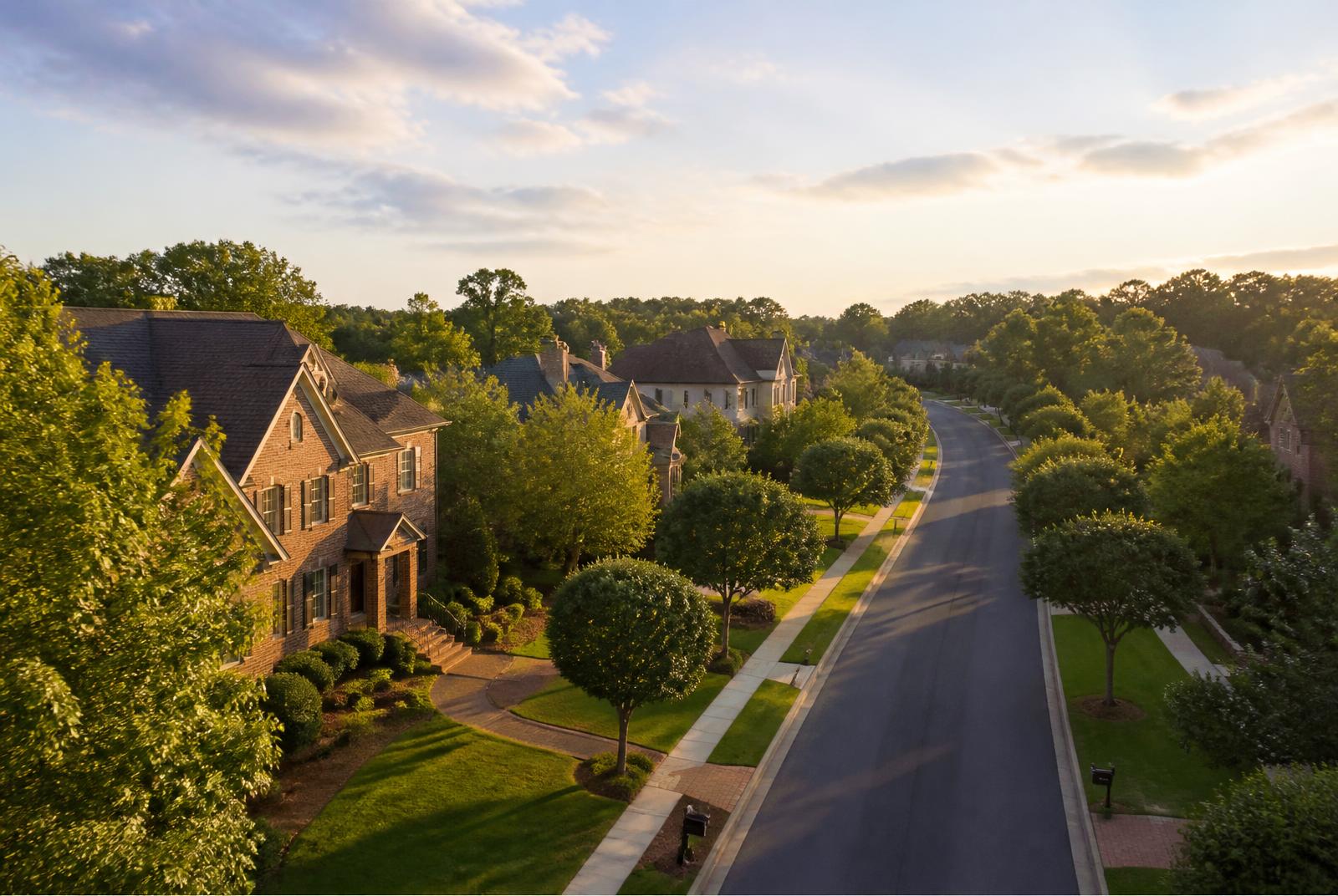
Where long-hold properties possess an undeniable competitive advantage is on the ground. Newer subdivisions across the county, as well as developments extending toward nearby Waxhaw, are routinely compelled by land constraints to operate on tighter parcels with minimal mature vegetation. In contrast, Highgate was configured with generous acreage and substantial street setbacks, allowing the tree canopy and perimeter landscaping to cultivate over decades.
This environmental maturity is an asset that cannot be replicated through new construction. Long-term residents have watched their screening trees grow into complete visual buffers, creating a degree of outdoor seclusion that commands significant attention. Custom properties featured in our overview of homes demonstrate that physical separation, well-sited terraces, and natural surroundings serve as foundational elements of resale value. Prospective buyers who migrate specifically toward Hemby Road often do so because they have exhausted options in higher-density communities and prioritize the unhurried, pastoral streetscapes preserved throughout this roughly 200-home neighborhood.
Furthermore, the variety across the neighborhood’s original construction styles means Highgate avoids the monotonous rhythm common to production-built tracts. As explored in our review of Highgate architecture, the community reflects a deliberate mix of European-influenced and classic southern traditional designs. Long-hold owners presenting well-preserved brick, natural stone, and heavy architectural rooflines are offering enduring craft that stands in contrast to the engineered exterior finishes prevalent in more recent regional building cycles.
Navigating Capital Systems and Interior Cycles
The most pragmatic hurdle encountered by long-hold owners relates to building systems and deferred modernization. In a custom estate spanning several thousand square feet, major capital assets follow predictable twenty-year lifecycles. Sellers often face critical decisions regarding whether to proactively replace multi-zone heating and cooling equipment, restore roof flashing and cedar accents, or modernise crawlspace conditioning before entering the active market.
Resale evaluations along the Weddington corridor consistently reveal that modern buyers conduct thorough, rigorous technical inspections. Long-hold properties that perform best on the open market are generally those where the owners maintained an unbroken paper trail of preventative servicing and system stewardship. When major mechanical elements are visibly updated, prospective purchasers approach the transaction with greater confidence, reserving their critical attention for cosmetic personalization rather than capital remediation.
Aesthetic updates represent an equally nuanced consideration. Original kitchen layouts featuring dark granite counters, heavy raised-panel cabinetry, and elaborate drapery treatments often mask the high quality of the underlying construction. Long-term owners who successfully transition their homes rarely need to execute full structural reconfigurations; rather, their resale preparations typically center on illuminating the existing volume of the space. Neutralizing heavy color palettes, modernizing lighting fixtures, and refinishing native hardwood floors allow the architectural integrity of the home to register clearly with modern purchasers.
Ultimately, long-hold owners in Highgate hold a unique position within Union County real estate. The scarcity of established, ungated acreage communities in Weddington provides an enduring foundation of interest. By understanding how buyer priorities have matured alongside the neighborhood’s tree line, long-term residents can position their custom properties to be recognized for both their historical craftsmanship and their continued contemporary relevance.
Editorial note: this journal uses an automated drafting and publishing process with programmed safeguards for local relevance, factual restraint, and internal-link quality. Verify address-specific information independently.